You want to know why pastors have trouble motivating their people to read God’s Word? It’s not for lack of Bibles. We have plenty of them. And it’s not for lack of good preaching. Most pastors regularly emphasize the importance of the Word.
It’s because our default method of Bible reading—what I like to call the “Lone Ranger Method”—is hard to sustain. Research shows that people just don't read the Bible on their own every day. The Lone Ranger was a good sheriff, but I bet he was a bad Bible reader.
So, what’s the solution? What would motivate more people in your church to read the Bible more consistently? I think it’s a new paradigm called “Community-based Bible Reading.” What’s that?
Community-based Bible Reading is when a significant number of people in a congregation commit to reading the same Bible passages, together, over time. Each day, they read the same passage individually. Each week they talk about these same passages in groups. Each Sunday they hear these same passages preached about in a sermon.
When a large enough core group is focusing on the same passages together, it creates a motivational updraft for Bible reading. People who struggle with the Lone Ranger Method are pulled along by the positive reinforcement all around them.
And the side effects of Community-based Bible Reading are significant. When many people are reading the same passages together, that’s what they talk about. They have a common experience in the Word to relate their lives to.
A pastor in a mainline denomination who tried this approach once told me, “The simple practice of having my people read five Bible passages in the week, which I then preach from on Sunday, has transformed my church.” That’s Community-based Bible Reading.
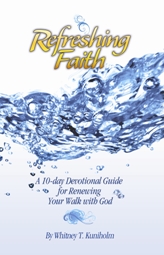
by Whitney T. Kuniholm











Awesome, I am a youth leader and I think this is a great method to get everybody together to read the Blble. Excellent.
The idea is based on God's nature and on what the nature of the Church should be. It's like eating the same food in the same bowl as in Africa community.
"...Return to your tents." (Dt 5:30)
Community-based bible study may just be the helpful, yet tentative, step back towards God's purposes for family.
"God made the two one flesh and Spirit. And why one? Because He wanted godly offspring..." (Mal 2:15)
REF: Dt 6:4-7, Ps 78:1-8, Eph 5, 6:1-4, etc.
DEF: tentative adj. Not fully worked out, interim, provisional.
This article says what I have been trying to get across get to folks, the "Daily Office" in th Book of Common Prayer provides an organized process to read scriture. Thank you for this. Chuck
Great post. Community-based Bible listening is also common around the world, because most people can't read. But once they begin to listen to Scripture, the desire to become literate arises.
I used E100 with a congregation over about a year as it prepared to disband. The materials went out to all the members no matter where they lived. People who couldn't be involved in person were still connected to each other through the readings. We focused on one or two readings each Sunday and another one in mid-week Bible study. They became a source of strength and a way to work through the grief - as well as a window onto God's work in and through that difficult time. E100 was a blessing and I recommend it to other congregations.
Have you heard about the American Bible Society’s Bible challenge for kids? It’s perfect for a Sunday school class project with the goal of raising money for the U.S. military to have Bibles. Check out this website: http://www.truthfortroops.americanbible.org/ for project ideas!
While I haven't experienced it, Community-based Bible reading strikes me as an effective tool to be used by more of us less-than-Bible-literate Episcopalians. At the same time, don't be too quick to put down the Lone Ranger, whose stories are strong on the morals and ethics we value.
I tried that in a church I used to attend. They used a daily devotional and assigned a passage each day through different books of the Bible. I thought it would be a good idea to exchange e-mail comments on the daily passages. I suggested this to members and got a lot of e-mail addresses from people who seemed interested. So I sent e-mails almost daily but got very little response. I'd get a single reply occasionally but no more.
Wouldn't it be a good idea to have something like this with the Discovery or Encounter readings?
JR