Defending the Bible

7 comments

Last summer I heard a story on the National Public Radio program All Things Considered that really irritated me.  I thought the on-air correspondent took a cheap shot at the Bible.  In fact, I was so frustrated I felt I had to do something to set the record straight. 

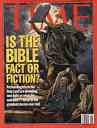
Have you ever felt that way?  Offended, frustrated even angry by how the media portrays the Bible and Bible-believing people?  We all have, but the question is: What’s the best way to defend the Bible in a pluralistic society?

There’s no easy answer.  And too often, Christians do a bad job of defending the Good Book.  We forget to “speak the truth in love.”  Or we’re content to speak only to ourselves.  Demonizing “them” may be good for getting a hearty Amen! (or for fund raising), but it won’t change anyone’s mind.  If we really want to defend the Bible, we must first read it and live it ourselves.  Then we must thoughtfully and lovingly engage with those who don’t believe it. 

So what did I do last summer?  The radio story was about the struggles of a gay black man, infected with HIV, living in the south.  I thought, prayed and then sent the following email:  

I appreciated Brenda Wilson’s segment about the rising rate of HIV infection among gay black men because it was informative and helped me understand the pain of the man she interviewed. 

But in the middle of her story, Ms. Wilson injected her own bias against Bible-believing people, at one point referring to the source of the man’s struggles by saying, “This is, after all, the Bible belt” with a condescending tone.  It’s true that some Bible believers, and non-Bible believers, are not compassionate towards those infected by HIV, and that’s wrong.  But the source of the man’s problem, as he admitted, was his own high risk sexual behavior. 

It is not intolerant or unloving to say that the Bible is the solution to, not the source of, the problems Ms. Wilson highlighted in her story.  If more people followed the Bible’s teaching on sexuality, there would be less sexually transmitted disease and more married couples enjoying God’s gift of sex.  And if more people followed the Bible’s teaching about showing compassion to the sick, the friendless and the needy, there would be less people experiencing the kind of anguish as the man in the story. 

What happened as a result of my effort?  Well, nothing that I could see.  I never heard back from Brenda Wilson, All Things Considered or National Public Radio.  But I did what I could to thoughtfully and lovingly speak up for God’s Word.  I believe that’s the best way to defend the Bible to a skeptical and needy world.  And that’s the opportunity both you and I have, every day.

Respond to this Post
Email this Post

Losing the Battle for the Bible

6 comments

For decades Christians have been engaged in a battle for the Bible. We’re frustrated that God’s Word is being removed from the public square.  We’re annoyed by a confused interpretation of “the separation of church and state” that privatizes the Bible’s message.  And we’re determined not to let the media disrespect God’s Word any longer.

There’s only one problem.  We’re losing the battle…and it’s our own fault.  Why?  Because most Christians would rather fight about the Bible than actually read it and live it.  While we've been busy on the front lines of the culture wars, statistics show that Bible reading among church-goers has been in decline. 

  • 90% of Americans own at least one Bible
  • Less than 20% will read the Bible through in their lifetime
  • 45% “rarely/never” read the Bible
  • 4% of Americans have a biblical worldview 
  • 9% of those “born again” have a biblical worldview

That’s why I’m convinced that the best way to promote biblical values in America is not to force The Good Book on a secular world.  Rather, it’s for the church to have a widespread renewal of Bible reading and living.  That will have a greater impact, at far less cost, than anything else we can do.

When I became the president of Scripture Union, I began asking God to cause Bible reading to take off like wildfire.  I know only He can make that happen. But I believe there are at least two things we can do to help.  First, we can commit to the basic discipline of reading God’s Word ourselves.  And second, we can pray that God will “ignite a Bible reading revival” beginning in the church.  Are you with me?

Respond to this Post
Email this Post

What is Bible Engagement?

5 comments


We don’t need more Bibles in America. What we need is more Bible engagement.  The question is, what exactly is that?


On a practical level it means there are different ways to take in the Bible’s message—reading, listening, discussing, watching, acting, etc. And on a philosophical level it means there are different outcomes that can result from connecting with the Bible, including  a) Knowledge: we can learn more about the Bible; b)Truth: we can understand and base our lives on biblical principles; c) Relationship: we can experience the presence of the living God as we read and attempt to obey his Word. 


My observation is that most Bible-related resources available today focus on helping us gain more knowledge and truth, both of which are important.  But the outcome that makes the Bible come alive, and the one that people are most hungry for, is a real encounter with God.  So while all our Bible engagement efforts must be well-designed and must aim for habit formation, the most important thing is that they must also help people develop a relationship with God.  That’s what Scripture Union is all about (“Helping people meet God every day”).

Respond to this Post
Email this Post

The Bible Reading Secret

4 comments

In the summer of 1974 I began receiving letters from a girl in New York.  I was living in Maryland and I didn’t realize it then, but those letters taught me something very important about the Bible.  At the time, I just wanted to keep them a secret.

I was a maintenance man that summer at a girl’s camp.  Part of my responsibility was to supervise a group of teenaged boys who worked in the kitchen and helped me with odd jobs around the camp.  They were “girl crazy” to say the least.  I spent all summer trying to keep them focused on work and studying the Bible.  I don’t think I was very successful.

But that’s why I kept the letters I was receiving a secret.  They were from Carol, the girl I would marry three years later.  I didn’t want the boys to taunt me, “You tell us not to think so much about girls, but look at you!”

The truth is, I loved getting those letters.  I loved when the envelope was thick, which meant there were many pages inside.  I loved the small, careful handwriting.  I loved to read the descriptions of what was happening in New York.  On the outside, I was a maintenance man trying to coach some boys towards “the better angels of the nature.”  On the inside, my heart was alive and drawing closer to my future wife.

Whenever I think of those letters I wonder, “What made them so exciting to me?”  Was it the number of pages, the style of writing, or even the events they described?  Yes, that was all part of it.  But the most exiting thing was that somewhere, far, far away, there was a beautiful girl with long brown hair who loved a tall lanky boy like me.  What made the letters come alive was the person on the other end.

And that’s how they taught me something about Bible reading.  Too often, we take an intellectual approach to the Bible.  We think that studying more and more will somehow make God’s Word come alive.  Of course, it’s valuable to gain Bible knowledge and to learn biblical truth.  But the most exciting thing about reading the Bible is to gain a deeper relationship with the Person behind it.  I call it “relational Bible reading,” and I believe it’s the active ingredient in a healthy devotional life.

Do you want to make your Bible reading come alive?  Then approach it as if it were a letter from God.  And as you read, remember that your goal is not to just to study a book; it’s to develop a lifetime relationship with the One who loves you more than you could ever think or imagine.

Respond to this Post
Email this Post

dashboard: | New Post | Edit Posts | Setings | Logout | Analytics |