Candy Crush and the Bible

11 comments

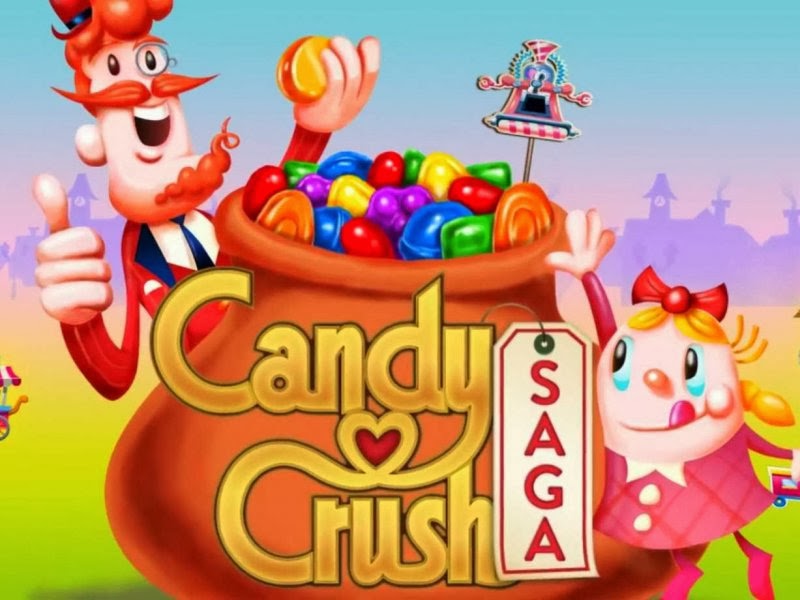
I’m embarrassed to admit this, but lately I’ve been thinking a lot about Candy Crush.  It's a mobile game that's become a worldwide sensation.  The game has been downloaded 500 million times and played more than 150 billion times.  But the reason I’ve been thinking about it is not what you’d expect.  You see, I believe Candy Crush has a lot to teach us about Bible reading.

I had never heard of Candy Crush until I read the recent article about it in TIME Magazine.  Intrigued, I downloaded the free app to my iPad and iPhone.  Soon I was lining up sets of three fruit candies and enjoying the deep-voice affirmation when I progressed to the next level, "Sugar crush!"

But what does a mindless mobile game have to do with Bible reading? It turns out the secret to the success of Candy Crush, according to developer Tommy Palm, is the habit-formation principles he incorporated into its design; things like keeping the process simple, providing positive feedback and encouraging players to connect on Facebook.

That fascinated me because ten years ago Scripture Union studied habit formation and the Bible. Instead of making daily devotions a heavy-duty study, we asked, “What would make Bible reading an enjoyable, repeatable behavior?” With the help of author and psychologist Dr. Jeff Brown of the Harvard Medical School, we looked at lots of habit-formation research. In the end, the principles that seemed most effective in the devotional life were: a) setting achievable goals, b) making a personal plan of action, c) using a pre-determined schedule, d) tracking one’s progress, and e) having the “soft accountability” of reading the Bible with another person or group.

We then built these principles into our E100® Bible Reading Challenge and the program took off. To date, over 2,500,000 people in dozens of countries and 20 languages, have participated. We’ve partnered with the American Bible Society to distribute E100® to the US Military. And we've even developed a youth edition. Honestly, E100® is growing faster then we ever imagined.

But in the end, the secret to regular Bible reading is not some kind of Candy Crush trickery. It’s what faithful Christians have known for centuries: meeting God in his Word is what brings you back to the Bible every day. SU is now building that approach into all its programs. As the Psalmist said, “My soul thirsts for God, for the living God. When can I go and meet with God?” (Psalm 42:2). That's what people truly crave.

After a week of playing Candy Crush (and progressing to level 23), I permanently deleted the game from my iPad and iPhone; I was wasting too much time on it.  But the good new is I’m still experiencing the joy of meeting God in the Bible every day, and I don’t plan to stop.  Bible crush!

Respond to this Post
Email this Post

Top 10 Urban Myths about the Bible

16 comments

You know what an "urban myth" is, right?  It's "a story of obscure origin that has little or no supporting evidence, and yet spreads spontaneously." In other words, it's a popular belief that's not true.  That seems like a perfect description of what many people think about the Bible.  How many times have you heard someone say, "Oh, today we know the Bible isn't true because..."?

So what I'd like to do is respectfully challenge some popular misimpressions about the Bible.  But first, let me be upfront about my bias: I believe the Bible is true.  So what I'll do is give you the evidence that led me to my conclusion.  Then it will be up to you to make up your own mind.  Fair enough?  OK, so let's take a look at the Top 10 Urban Myths about the Bible.
  1. The Bible was created by church officials to maintain their own power. “The content is far too counterproductive…to promote [the church] policies, consolidate their power, and build their movement. If this popular view is correct, we would expect to see many places in the gospels where Jesus takes sides in debates that were going on in the early church …However, we do not find this.” Timothy Keller in The Reason for God.
  2. Modern translations of the Bible obscure the original meaning. “The only kind of sanctity which Scripture can lose (or, at least, New Testament scripture) by being modernized is an accidental kind which it never had for its writers or earliest readers… We ought therefore welcome all new translations (when they are made by sound scholars).” C.S. Lewis in God in the Dock.
  3. The Bible as we know it omits other Gospels that tell a different story about Jesus. “The vastly exaggerated claims made on behalf of these gospels are more revealing about what contemporary scholars and writers would like to find about the first Christian ages, and how these ideas are communicated, accurately or otherwise, to a mass public. The alternative gospels are thus very important sources …for what they tell us about the interest groups who seek to use them today; about the mass media, and how religion is packaged as popular culture…” Philip Jenkins in Hidden Gospels: Howthe Search for Jesus Lost Its Way.
  4. The Bible was written centuries after the events it describes supposedly happened. “The great majority of the New Testament books were penned between A.D. 50 and 100.” David F. Payne in New InternationalBible Commentary.
  5. The Bible's view of God is inconsistent: in the Old Testament he's mean and angry, in the New Testament he's loving and forgiving. “The wrath of God is His eternal detestation of all unrighteousness. It is the displeasure and indignation of Divine equity against evil... Not that God’s anger is a malignant and malicious retaliation, inflicting injury for the sake of it, or in return for injury received. No; while God will vindicate His dominion as Governor of the universe, He will not be vindictive.” A.W. Pink in The Attributes of God.
  6. The Bible advocates things we know are wrong, like slavery. “While the Bible does not reject slavery outright, the conclusion that it actually favors slavery is patently wrong. Scripture does reveal that slavery is not ideal, both in Old Testament laws forbidding the enslavement of fellow Israelites, the law of jubilee, and in New Testament applications of Christ. In fact, the Bible teaches that the feeling of superiority in general is sin! The abolition of slavery is thus not only permissible by biblical standards, but demanded by biblical principles.” Ravi Zacharias, “Does the Bible Condone Slavery” in Slice of Infinity (http://www.rzim.org/a-slice-of-infinity/does-the-bible-condone-slavery/).
  7. The Bible is against proven science. “Science and religion … are friends, not foes, in the common quest for knowledge. Some people may find this surprising, for there’s a feeling throughout our society that religious belief is outmoded, or downright impossible, in a scientific age. I don’t agree. In fact, I’d go so far as to say that if people in this so-called ‘scientific age’ knew a bit more about science than many of them actually do, they’d find it easier to share my view.” Rev. Dr. John Polkinghorne in Quarks, Chaos and Christianity.
  8. The Bible has been discredited by modern archaeology. “Now, however, it is no longer possible to reject the substantial historicity of the Bible, at least as far back as the time of Abraham, because of the remarkable discoveries of archaeology.” Henry Morris as quoted by Roy Mills in Truth—Not Exactly: A Book for Truth Seekers and Those They Care About.
  9. The Bible is full of errors and can't be trusted. “We can be sure that copyists worked with great care and accuracy on the Old Testament, even back to 225 B.C. At that time there were two or three types of text available for copying. These types differed amongst themselves so little, however, that we can infer that still earlier copyists had also faithfully and carefully transmitted the Old Testament text. Indeed, it would be rash skepticism that would now deny that we have our Old Testament in a form very close to that used by Ezra when he taught the Law to those who had returned from the Babylonian captivity.” From an essay by R. Laird Harris, “How Reliable Is the Old Testament Text?”, in the book, Can I Trust My Bible?
  10. The Bible may be great literature but it's not "inspired by God. “The word ‘inspired’ … refers not to the writers, but to the words that have been written… A further indication that the Bible is the Word of God is in the remarkable number of fulfilled prophecies it contains.” Paul E. Little in KnowWhy You Believe.
What do you think?  Before you answer, there's one more important piece of evidence you need. For the sake of intellectual integrity you should read the Bible yourself.  Then you can make your own decision.   So here's my challenge: find a Bible and read the Gospel of John.  No preaching from me or anyone else.  Just "pick it up and read it," as a child once challenge St. Augustine.  It changed his life and I pray it will change yours.


Respond to this Post
Email this Post

dashboard: | New Post | Edit Posts | Setings | Logout | Analytics |